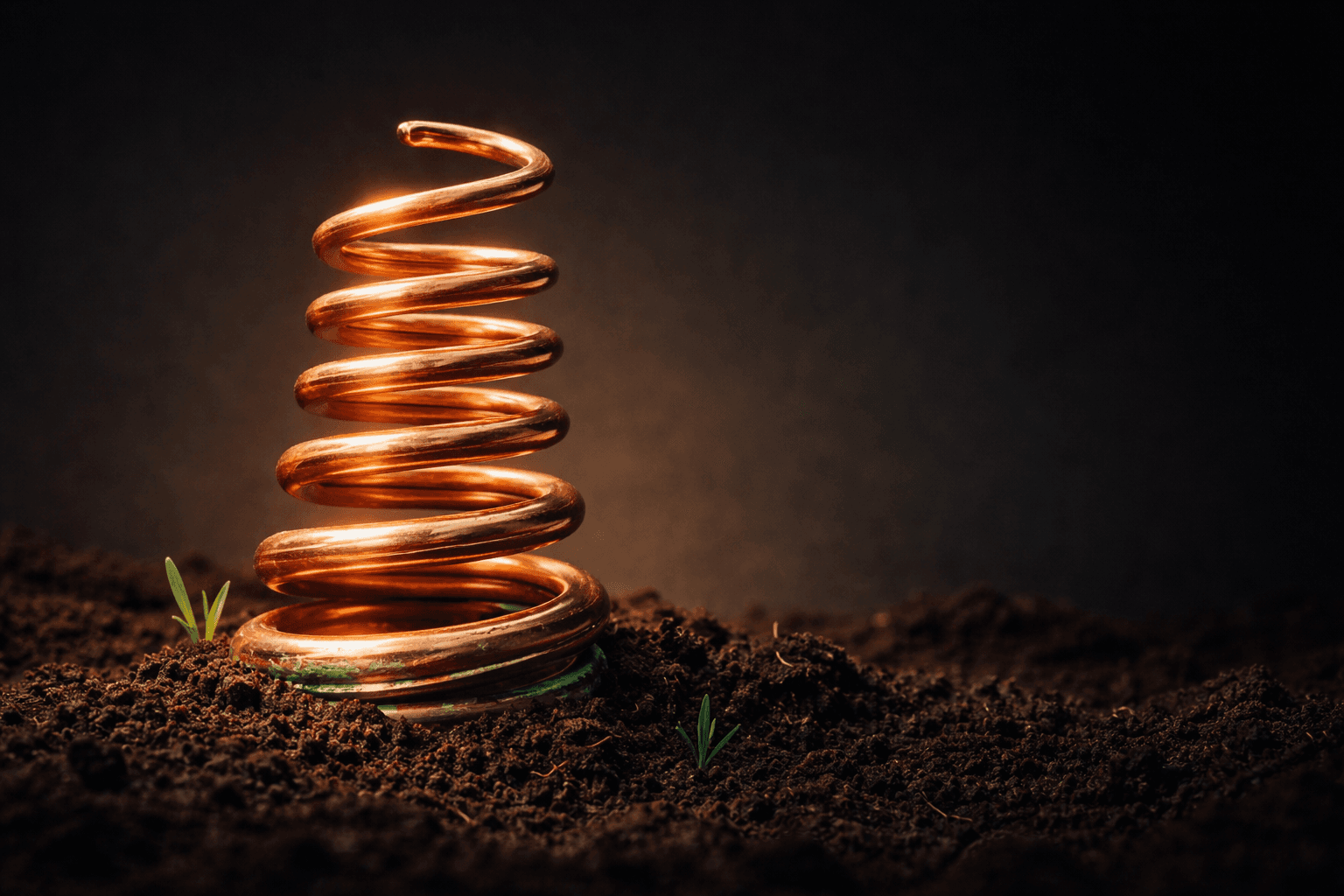
Copper Is Quiet and Relentless
Most metals just sit there. Copper actually does things. It conducts electricity better than almost anything on Earth. It kills bacteria on contact. It doesn't rust — it patinas, which is basically copper putting on armor. And humans have been using it for at least 10,000 years, which is a longer track record than pretty much any material we work with.
I think we've forgotten how remarkable this metal is. We see it in old pennies and plumbing pipes and stop thinking about it. That's a mistake.
Copper in the Garden
Gardeners have a complicated relationship with copper. Old-timers know it works. They just can't always tell you why.
Here's what copper does in and around your garden:
- Electroculture antennas. Copper's conductivity makes it the ideal material for capturing atmospheric energy and feeding it into the soil. This is the backbone of what we do at Go To Electroculture. A copper antenna in the ground is the simplest, most effective tool for stimulating plant growth without chemicals.
- Pest deterrent. Slugs and snails won't cross copper. Something about the metal's surface interacts with their slime and gives them a mild electrical shock. Copper tape around raised beds is one of the oldest organic pest control tricks out there.
- Soil health. Copper is a trace element that plants actually need. In small amounts, it supports enzyme function and photosynthesis. The copper that slowly weathers off an antenna isn't contamination — it's a micro-nutrient.
There's a reason I didn't pick aluminum or steel for our products. They're cheaper, sure. But they don't do what copper does. Not even close.
Copper and Water
In Ayurvedic tradition, people have stored drinking water in copper vessels for thousands of years. They didn't have microscopes. They just noticed that people who drank from copper got sick less often.
Modern science caught up and confirmed it. Copper is oligodynamic — it kills bacteria, viruses, and fungi on contact. Water stored in a copper vessel for several hours shows significant reduction in harmful microorganisms. This has been tested and published in actual journals, not just wellness blogs.
We carry copper water bottles and cups for exactly this reason. Not because it's a trend. Because it works, and it's been working since before written history.
When your great-grandmother kept a copper pot for water, she wasn't being trendy. She was being smart. Some knowledge survives for a reason.
Copper as EMF Shielding
Here's one most people don't know about. Copper mesh is one of the most effective materials for blocking electromagnetic radiation. It's used in Faraday cages, in hospital shielding, in military applications. This isn't fringe — it's engineering.
We make copper mesh products because more people are asking questions about the wireless signals saturating their homes. Whether you're deeply concerned about EMFs or just want to reduce exposure in your bedroom while you sleep, copper mesh does the job. It's not a magic cure for anything. It's a physical barrier that blocks specific frequencies. That's just how conductors work.
The nice thing about copper mesh is it's passive. No power needed. No maintenance. Hang it, place it, forget about it. It'll still be doing its job in fifty years.
Copper You Can Wear
People have worn copper rings and bracelets for centuries. In many cultures, it's tradition. In others, it's folk medicine. The claims vary — joint support, improved circulation, grounding to the Earth's electromagnetic field.
I'm not going to tell you a copper bracelet will fix your arthritis. I will tell you that copper absorbed through the skin is a real, documented phenomenon, and that many people who wear copper report feeling better. Maybe it's the trace minerals. Maybe it's something else. Maybe it's placebo. I don't know, and I'm comfortable not knowing.
What I do know is that if you're going to wear copper, wear real copper. Not copper-plated steel. Not copper-colored aluminum. Actual, solid copper. The cheap stuff oxidizes wrong, turns your skin green in a bad way, and doesn't have the same properties. You get what you pay for.
Why We Use Real Copper
This probably goes without saying at this point, but everything we sell is real copper. Solid copper wire. Solid copper vessels. Solid copper mesh. No plating. No alloy shortcuts. No "copper-infused" marketing nonsense where they wave a copper rod over a vat of plastic and call it a day.
Real copper costs more. It's heavier. It's harder to work with. And it's worth it every single time, because the properties that make copper special — the conductivity, the antimicrobial action, the durability — only exist when you're actually using copper. A thin layer of copper over zinc doesn't conduct like copper. It doesn't kill bacteria like copper. It's a costume, not the real thing.
Thousands of Years and Counting
Copper was one of the first metals humans ever worked with. The Copper Age is literally named after it. Egyptian, Roman, Greek, Indian, and Chinese civilizations all used copper extensively — for tools, for medicine, for water, for ceremony.
It's not trending. It's enduring. There's a difference.
We just shape it. Coil it into antennas, form it into vessels, weave it into mesh. The copper does the rest, same as it always has. Same as it will long after we're gone.